Educated Drug Dealer SVG – Nurse Embroidery Design Review
When I first opened the Educated Drug Dealer SVG - Nurse SVG file, I wasn’t sure what to expect. The name itself grabs attention instantly, and as a designer who tests embroidery assets for real small shop use, I know that clever wordplay can either land beautifully or feel forced. This one lands. It carries a confident, slightly rebellious humor that nurses immediately connect with. The design reads like a badge of pride, a wink to the people who handle medication day in and day out with skill and precision. But beyond the smirk, I needed to see how it actually behaves when you take it from a screen graphic into a stitched, tactile product.
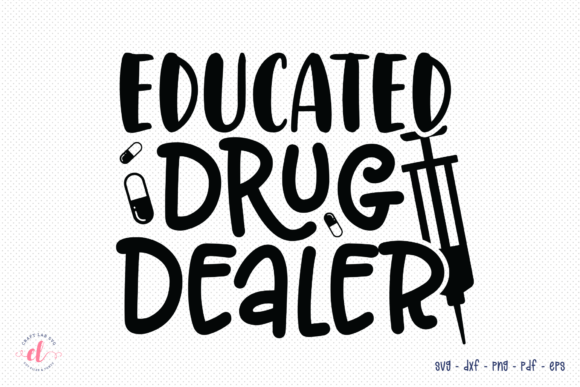
I pulled the design into my software and immediately started picturing it on a finished piece. The layout feels balanced, with enough negative space around the lettering to keep the stitches from crowding. The phrase “Educated Drug Dealer” sits front and center, and the nurse-themed visual cues — whether it’s a subtle caduceus, a syringe accent, a pill shape, or a heartbeat line, depending on the exact version — tie the whole thing together. The mood is playful but professional enough that a nurse would actually wear it on a shift. That’s a delicate line to walk, and this graphic walks it well.
First Impressions and Visual Personality
The mood of the Educated Drug Dealer SVG - Nurse SVG is bold and unapologetic. It leans into a bit of insider humor that works perfectly for healthcare workers, especially those who deal with medications daily. The lettering style usually has a clean, slightly urban or modern script feel, sometimes with a blocky sans-serif presence that digitizes well. The shape tends to be rectangular or slightly arched, which makes it easy to position on a chest pocket, the center of a tote bag, or the front panel of a cap. The detail level appears moderate, not overly intricate, which is a blessing when you’re converting from an SVG to an embroidery file. Too many tiny disconnected elements can cause registration nightmares on a hooped garment, but this design’s components feel intentional and connected enough to maintain stitch integrity.
I immediately thought of how this would look on a scrub top pocket or the back of a hoodie for a nurse practitioner. The artwork has personality, but it’s not messy. The lines are clean, the curves are smooth, and the overall composition screams “ready to wear.” For a digital product that falls under the Graphics category, it’s clearly designed with final product use in mind, not just as a screen decoration.
Translating SVG to Embroidery: What Actually Matters
If you’re an embroidery designer or a small business owner who plans to stitch this out, you know that not every SVG converts well. The Educated Drug Dealer SVG - Nurse SVG gives you a solid starting point. The lack of extreme fine detail means you can confidently assign satin stitches to the main lettering and use a light fill stitch for any accompanying icon or shape. I’d personally break the design into two or three stitch types: a dense satin for the main text, a slightly lighter running stitch for smaller decorative elements, and a fill stitch if there’s any background shape. The clean lines help avoid jump stitches and messy trims, which is a real time-saver during production.
But here’s where practical experience kicks in. The design’s boldness can also be a double-edged sword. On a thin, stretchy knit fabric like a standard t-shirt, a dense satin stitch can pull the fabric and create puckering if you don’t use the right stabilizer. I always recommend a cut-away stabilizer, and if the text is large, maybe even a second layer of tear-away to keep the stitches crisp. For a sweatshirt with a fleece backing, the design might need slightly reduced density to prevent the stitches from sinking into the pile. These are not flaws of the design itself; they’re just the realities of taking a digital graphic and making it physical.
Real-Life Project: A Custom Nurse Appreciation Tote
I decided to mentally test this design on a sturdy canvas tote bag, the kind you’d gift to a nurse during Nurses Week or as a graduation present. Picture this: a natural cotton tote, the design centered about four inches from the top, with a deep navy blue thread for the main text and a pop of crimson for the accent. That’s the project I’d pitch to a boutique buyer. The Educated Drug Dealer SVG - Nurse SVG has just the right amount of edge to make a practical gift feel personal and memorable. It’s not a generic “Thank You Nurse” design; it’s a conversation starter. When I imagine a customer receiving that tote, I see them smiling, maybe laughing, and immediately using it. That’s the kind of emotional response that builds customer loyalty and repeat sales.
For this tote bag scenario, I’d use a medium-weight cut-away stabilizer, hoop the canvas with a layer of temporary adhesive spray, and run a test stitch on a scrap of the same fabric. The satin stitch on the edges of the letters would need to be clean because a tote bag gets handled roughly. I’d also check the lettering’s smallest areas — like the inside of a lowercase “e” or “a” — to make sure they don’t close up with the thread. If the SVG had extremely tiny counters, I’d enlarge the design slightly or adjust the stitch width in my software. Since the description mentions this is great for nurses and perfect for t shirts, mugs, signs, cards, and more, I’d also test it on a simple cotton t-shirt with a light stabilizer just to see how the edges hold up. The design’s versatility is a huge plus for a small shop owner.
Where This Design Shines and Where to Be Cautious
I’d confidently use the Educated Drug Dealer SVG - Nurse SVG on a range of products: unisex sweatshirts, sturdy aprons, zippered pouches, kitchen towels, and even structured caps. The humor works particularly well on drinkware too, but since we’re talking embroidery, I’d limit it to flat or slightly curved surfaces. A cap is possible if the design is not too wide and you can keep the lettering centered on the front panel. However, I’d be cautious about using it on extremely textured fabrics like terry cloth or waffle weave, because the fine details around the lettering and any small icons might lose definition. Also, on dark fabrics, you need to consider thread color contrast carefully. A white thread on a black shirt would pop, but a light gray on a heather gray might wash out, so always test your thread palette before committing to a full production run.
Baby items? That’s tricky. The phrase might not be everyone’s taste for a baby blanket, but a onesie that says “My Mom’s an Educated Drug Dealer” could be a hilarious shower gift for a nurse mom-to-be. Just be mindful of the fabric’s softness and use a gentle backing so the stitches don’t irritate sensitive skin. For holiday gifts, this design could be a hit on a custom pillow cover or a framed hoop art piece for a nurse friend. The key is to match the product to the bold personality of the text.
Commercial Use and Customer Perception
From a business perspective, the Educated Drug Dealer SVG - Nurse SVG offers strong potential for sellers who cater to the healthcare niche. The phrase is memorable, and when customers see it stitched cleanly on a product, they perceive value. A well-executed embroidered sweatshirt with this design can command a higher price because it feels like a limited-edition statement piece, not a mass-produced item. The design’s theme also fosters a sense of community among nurses, which can lead to word-of-mouth promotion. I’ve seen similar designs on Etsy sell well because they tap into an inside joke that’s immediately recognizable.
However, professionalism in stitching is everything. A poorly hooped, poorly digitized version of this design will look cheap, and the humor will fall flat. That’s why I always recommend testing the design in black and white first. Convert the SVG to a simple embroidery file and stitch it out in a single color on scrap fabric to see if the shapes read correctly without color. If the design relies on color to distinguish elements, you might need to adjust the stitch order or add a subtle outline. Also, check the licensing terms before you sell finished items. The description suggests it can be used with Cricut and other cutting machines, but for embroidery, you need to confirm that the digital file can be digitized and sold as a physical product. Many SVG sellers allow commercial use on physical products, but always verify so you don’t run into issues later. I’d reach out to the seller or read the full license if it’s provided.
Stitching Tips for a Flawless Finish
If you’re planning to convert this Educated Drug Dealer SVG - Nurse SVG into an embroidery file, here are the notes I’d jot down in my studio log:
- Test on scrap fabric that matches your final product’s weight and stretch. Don’t skip this step, especially with text-heavy designs.
- Check thread color contrast against the fabric. A dark thread on a dark fabric might make the joke unreadable at a distance.
- Review stitch density in your digitizing software. Too dense and you’ll get puckering; too light and the satin stitches will look sparse.
- Confirm hoop size before you start. The design should fit comfortably within the hoop with at least a half-inch margin for the stabilizer.
- Inspect small details like the inside of letters and any thin connecting lines. Widen them if necessary so the needle doesn’t perforate the fabric too aggressively.
- Test in black and white mockups to ensure the design still communicates the message without color cues.
- Compare light and dark fabric backgrounds to see how the design’s presence changes. A bright red thread on white looks different from a bright red on black.
- Use the proper stabilizer for your fabric type. Cut-away for knits, tear-away for wovens, and a topper for towels or fluffy fabrics.
- Check whether the design works for both personal and commercial projects by reviewing the license. If you’re an Etsy seller, you need clear commercial rights.
- Confirm licensing before selling finished items or digital products to avoid any copyright headaches.
Product Pairings and Brand Building
For small shop owners, the Educated Drug Dealer SVG - Nurse SVG pairs beautifully with other nurse-themed embroidery designs to create a cohesive collection. I’d use it on a minimalist sweatshirt, a canvas tote, and a matching cap, then photograph them together for a listing. The consistent bold humor builds brand recognition. If you sell digital embroidery files, this design is a strong addition to a bundle of healthcare worker designs. The Graphics category listing indicates it’s meant for crafters, and the mention of Cricut use means it’s also suitable for heat transfer vinyl, printable transfers, and even screen printing. That cross-compatibility makes it a versatile asset in your design library.
When I think about the overall feel of this design, it’s not delicate or dainty — it’s unapologetically fun. That means it works best on items that share that same sturdy, everyday vibe. A silk pillowcase? Probably not. A rustic denim jacket? Absolutely. The design’s personality elevates a simple blank product into something with a point of view. That’s exactly what customers look for when they’re buying a personalized gift.
Final Thoughts for Embroiderers and Craft Business Owners
After thoroughly evaluating the Educated Drug Dealer SVG - Nurse SVG from a production standpoint, I’d say it’s a solid candidate for embroidery projects if you’re willing to put in the test work. The design has a clear theme, a humorous edge, and a layout that digitizes with relative ease. It’s not overly complex, which reduces the risk of stitching errors, and it fits well on a variety of products. For a craft business, the nurse niche is always in demand, and this design offers a fresh, non-generic take that can set your shop apart.
My biggest piece of advice is to not rush the digitizing process. Spend time refining the stitch angles, underlay, and density. The original SVG is your starting point, but the final embroidery file is what your customer will touch and feel. A little extra care during the conversion will make the difference between a product that looks homemade and one that looks professionally crafted. And always, always stitch a sample before you list it. The moment you see that crisp satin lettering pop against a cozy sweatshirt, you’ll know the design was worth it.